If your rabbit has stopped eating or passing droppings, call a rabbit-experienced vet now; useful notes can follow the call.
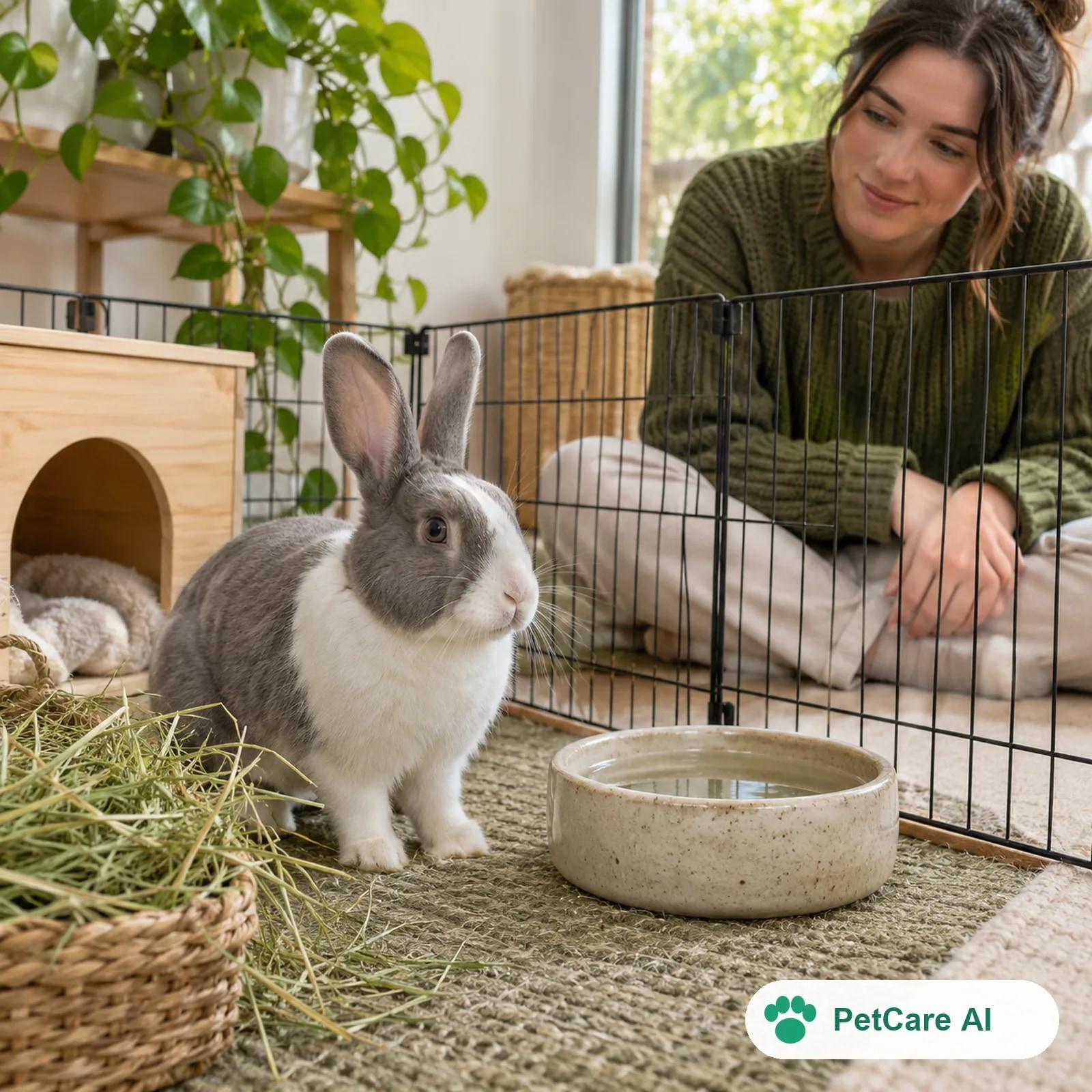 Notice food intake and droppings together, and tell the clinic what changed from your rabbit's usual pattern.
Why does this need a call now?
The Rabbit Welfare Association & Fund treats a rabbit losing their appetite or stopping passing droppings as an emergency requiring veterinary attention. Do not wait overnight or use a dog or cat's eating timeline for a rabbit.1
Call your usual rabbit-experienced clinic. If it is closed, contact an emergency veterinary service and explain that your rabbit is not eating or producing droppings. Ask where they can be assessed and follow the clinic's instructions.
Fewer, smaller or unusually shaped droppings also matter, particularly alongside reduced eating. Tell the clinic about these changes even if droppings have not stopped completely.1
Is it always gastrointestinal stasis?
Gastrointestinal stasis describes slowing of normal movement through the digestive tract. Pain, dental disease, other illness and stress can contribute. Reduced eating and gut movement can then become a worsening cycle.2
However, an obstruction can produce similar signs. You cannot safely establish the difference by looking at a food bowl or comparing symptoms online. A vet may need an examination and imaging or other tests to investigate the cause.2
The practical point is simple: “possible stasis” is information for the clinic, not a confirmed diagnosis or a home treatment plan.
What should I tell the veterinary team?
Start with the change and the timing. You can say: “My rabbit last ate normally at [time]. Since then they have eaten [what and how much]. Their droppings are [absent/fewer/smaller/different].”
Keep the rest brief and factual:
| Detail | What to note |
|---|---|
| Food | Last hay, greens and pellets actually eaten |
| Droppings | Last seen, approximate amount and how they differ from usual |
| Behaviour | Whether your rabbit is moving, resting or behaving differently |
| History | Recent medicines, dental problems, illness or diet changes |
| Household | Whether food and droppings are shared with another rabbit |
If you cannot tell which rabbit ate or passed droppings, say so. Avoid delaying the call to collect perfect measurements or photographs. Ask the clinic whether it wants a photograph or a sample brought to the appointment.
What should I avoid before the examination?
Do not start syringe-feeding without veterinary advice. The vet needs to consider obstruction before assisted feeding; the RWAF specifically recommends veterinary advice before starting it.3
Do not use leftover gut-movement medicines or try pineapple juice as a treatment. The RWAF warns against these approaches, including the risk of using medicines that stimulate gut movement when a blockage is present.1
Ask the clinic what to do about food, water, handling and transport while you are on the way. A rabbit eating one tempting mouthful is not enough information to cancel the visit yourself. Update the veterinary team and let it advise you.
Where PetCare AI can help after you call
Make veterinary contact first. Once care is being arranged, PetCare AI can help you keep the observations together in a health diary and describe the sequence of changes in a health assessment.4
A useful note might read: “Called the clinic at 9.10 am. Last normal hay intake was yesterday evening. Fewer droppings noticed this morning. Appointment arranged for [time].” This is an example record, not a suggested time to wait.
Add the clinic's instructions in your own words and check anything you do not understand directly with the veterinary team. Keep a separate list of questions: What caused the change? What should I record after treatment? What would mean we need to come back?
AI complements veterinary care. It cannot examine your rabbit, exclude a blockage or determine whether assisted feeding is safe. An app assessment must not delay the visit.
After treatment: build a useful normal baseline
Follow the vet's individual recovery and feeding plan. For long-term care, suitable hay or grass is central to a rabbit's diet, with fresh water available. Fibre supports digestive and dental health; diet changes should be discussed with your vet and introduced appropriately.5
Once your rabbit is well, keep simple records of their usual hay intake, droppings and behaviour. Our pet health tracking guide offers a starting point for keeping those observations in one place.
Keep your rabbit's care notes together with PetCare AI. Use the app to organise observations and follow-up questions after veterinary contact. If your rabbit is not eating or passing droppings now, call the clinic first.
Sources
Footnotes
-
Rabbit Welfare Association & Fund. Gut Slowdown. Emergency appetite and dropping changes, and treatments to avoid without veterinary assessment. ↩ ↩2 ↩3
-
VCA Animal Hospitals. Gastrointestinal Stasis in Rabbits. Causes, consequences and veterinary investigation, including obstruction. ↩ ↩2
-
Rabbit Welfare Association & Fund. Syringe Feeding Guide. Veterinary advice before assisted feeding. ↩
-
PetCare AI. Health assessment and care tools. Product information supporting health assessment and diary descriptions. ↩
-
RSPCA Australia. What should I feed my rabbits?. Hay, fibre, water and appropriate everyday feeding. ↩