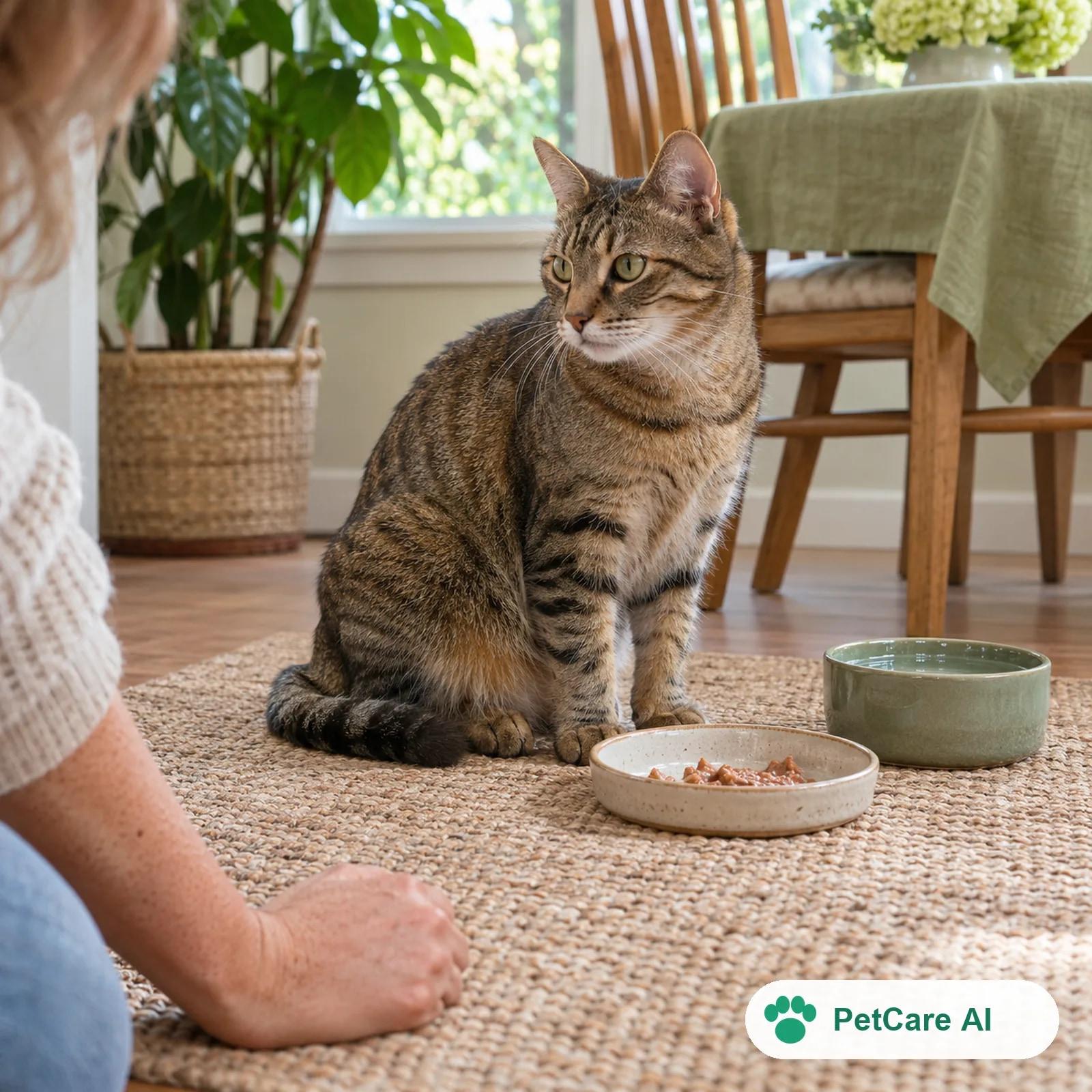
A full food bowl and an empty water bowl tell only part of the story: look at your dog's appetite, behaviour and other symptoms together.
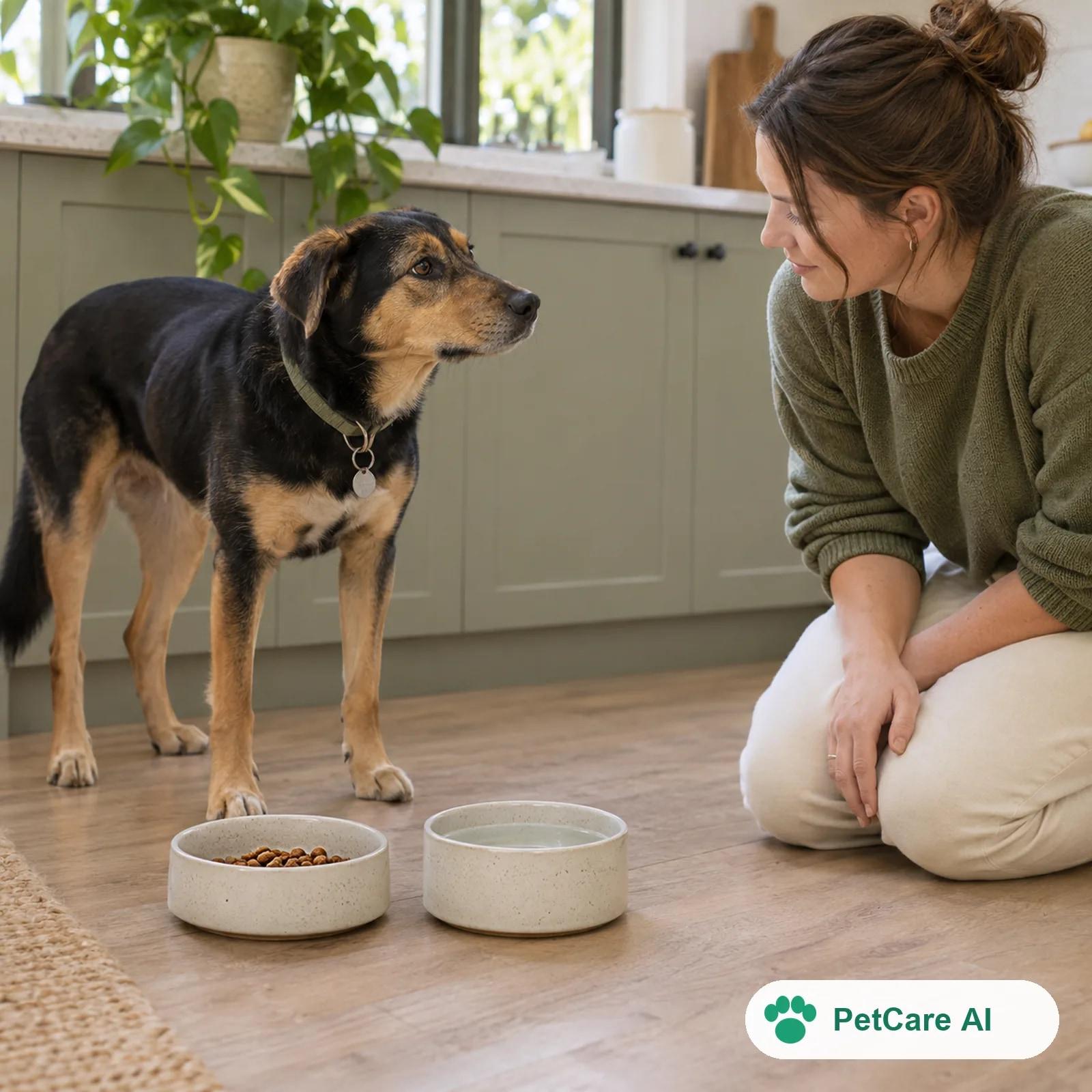 Start with what changed: the last normal meal, what was actually eaten and how your dog is behaving now.
Is drinking water a reassuring sign?
Drinking does not rule out a problem that needs a vet. Appetite loss has many possible causes, including dental pain, nausea, illness and stress. A dog may still drink while one of those problems affects eating.12
Call your vet when your dog's eating habits change, particularly if the change persists or another symptom appears. PDSA advises seeking veterinary help very quickly if a dog has eaten nothing for more than 24 hours. That is a reason to act, not a suggested waiting period.1
When you call, mention your dog's age, existing conditions and medication. Ask the clinic how soon your particular dog should be seen rather than applying an online time limit.
Which signs mean I should seek emergency help?
Contact an emergency vet immediately if appetite loss comes with difficulty breathing, collapse, severe pain or straining without passing urine.3
Repeated attempts to vomit without bringing anything up, especially with restlessness, drooling or a swollen abdomen, can indicate gastric dilatation-volvulus, also called GDV or bloat. It needs emergency treatment; the belly may not always look obviously swollen.4
If these signs are present, contact the clinic and follow its instructions. Do not spend time testing another meal or completing an app assessment first. Our guide to dog bloat and GDV explains that particular emergency in more detail.
Why would a dog want water but refuse food?
One useful distinction is whether your dog has lost interest in food or seems interested but struggles to eat. Vets distinguish reduced appetite from difficulty picking up, chewing or swallowing food.2
| What you notice | What to tell the vet |
|---|---|
| Walks away without trying the food | When this started and whether any food has been eaten |
| Approaches the bowl but drops food or struggles to chew | Exactly what happens when eating is attempted |
| Eats treats but leaves the usual meal | The amounts and types of food actually eaten |
| Drinks differently from normal | Whether drinking seems increased, reduced or difficult |
These observations describe a pattern; they do not establish the cause. Eating a treat also does not prove that a dog is well. A veterinary assessment may include a mouth examination and further tests depending on the history and findings.2
What should I record before calling?
Prepare a short account rather than trying to name the illness:
- Timing: the last normal meal and when you first noticed the change.
- Amount: none, a few mouthfuls or roughly half the usual portion.
- Other changes: vomiting, stools, urination, energy and signs of discomfort.
- Context: new food, medication, a stressful event or possible access to rubbish, toys or something toxic.
For example: “She ate her normal dinner yesterday. This morning she sniffed breakfast and left it. She has had some water, vomited once and seems quieter.” This is an example of useful wording, not a diagnosis or a reason to wait.
Ask your vet what to offer while awaiting the appointment and what changes should trigger an immediate return call. Avoid starting medicines or appetite treatments without veterinary advice.2
How PetCare AI fits into the next step
For a dog without emergency signs, you can describe the change to Sage, PetCare AI's Health Guide, including when eating changed, actual intake and any other symptoms. The guided health assessment asks follow-up questions and provides an urgency level and suggested next steps.5
A useful starting message is: “My dog is drinking but has eaten much less than usual. This began [time]. Their energy is [description], and I have noticed [other changes].” Replace the brackets with your observations; say when you are unsure.
Keep those details together in your pet's health diary and review them before speaking to the clinic. Our guide to tracking pet health explains how a consistent record can support that conversation.
AI complements veterinary care. It cannot examine your dog's mouth, feel their abdomen or confirm the cause of appetite loss. An app response should never delay emergency care or override instructions from your vet.
What if my dog starts eating again?
Record what was eaten and when, then update the clinic if you have already called. Ask whether the appointment or monitoring plan should change. A small snack is different from a return to normal meals, and ongoing or recurring appetite changes still warrant veterinary advice.1
For everyday record keeping, note normal meal portions as well as unusual days. “Less than normal” becomes more useful when you can explain what normal looks like for your dog.
Need help organising what changed? PetCare AI helps you describe symptoms, keep a health diary and prepare for a clearer conversation with your vet. If your dog has emergency signs, contact the clinic first.
Sources
Footnotes
-
PDSA. My dog isn't eating properly. Veterinary guidance on appetite changes, causes and seeking help. ↩ ↩2 ↩3
-
VCA Animal Hospitals. Anorexia in Dogs. Appetite loss, difficulty eating and veterinary investigation. ↩ ↩2 ↩3 ↩4
-
Merck Veterinary Manual. When to See a Veterinarian. Emergency signs requiring immediate veterinary attention. ↩
-
PDSA. GDV (gastric dilatation volvulus) in dogs. Signs and emergency treatment of GDV. ↩
-
PetCare AI. Health assessment and care tools. Product information; this supports app feature descriptions, not clinical claims. ↩