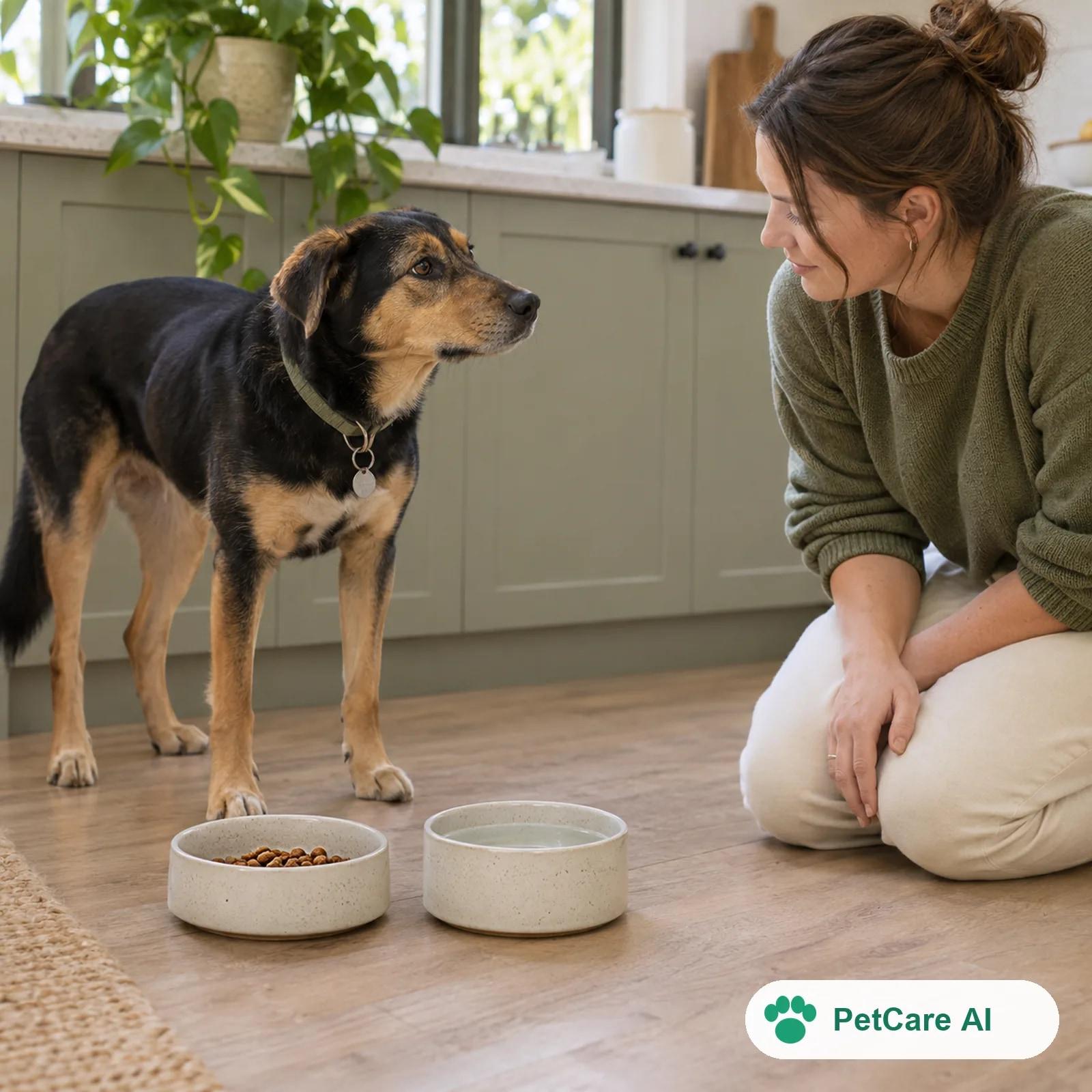
A cat leaving food deserves attention, even when the explanation might seem as simple as a different flavour or a busy household.
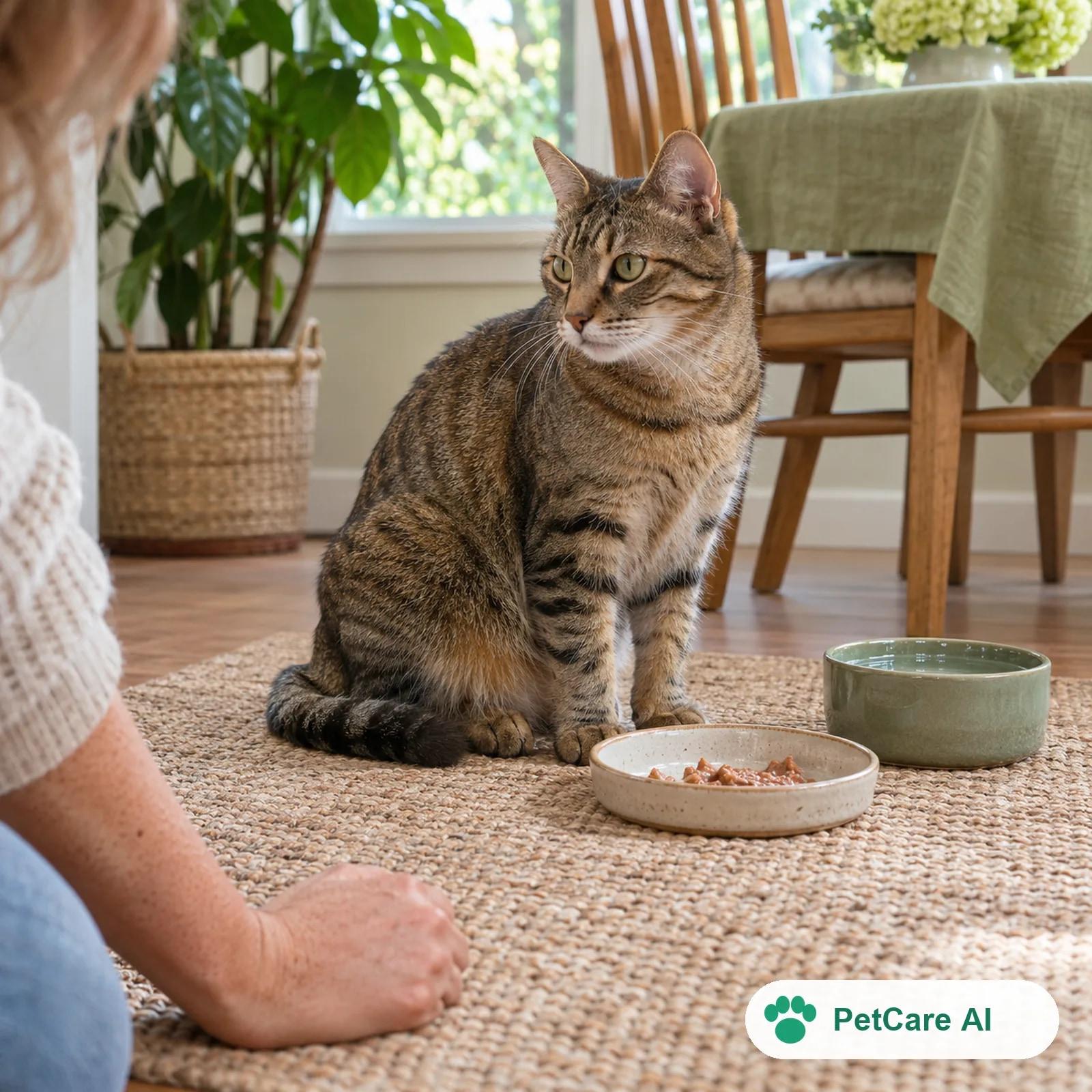 Knowing what your cat actually ate is more helpful than knowing food was available.
When should I call the vet about a cat not eating?
Contact your vet promptly if your cat stops eating or is eating significantly less than normal. Cornell's Feline Health Center warns that sustained appetite loss can seriously affect an adult cat in as little as 24 hours. Young kittens can become unwell sooner; do not treat an adult timeline as safe for a kitten.1
Tell the clinic when your cat last ate a normal amount, their age and any other changes. Do not wait for a time threshold if they seem unwell. PDSA advises veterinary assessment when a cat's eating habits change.2
Seek emergency help immediately for breathing difficulty, collapse, severe pain or straining without passing urine.3 If your cat repeatedly visits the litter tray without producing urine, see our cat urinary blockage guide and contact an emergency vet.
Why is appetite loss particularly important in cats?
Cats can lose their appetite because of illness, pain or changes in their surroundings. A vet needs to distinguish these possibilities rather than assuming the cat is being fussy.1
Prolonged inadequate food intake can also contribute to hepatic lipidosis, a serious condition in which fat accumulates in the liver. Overweight cats are particularly vulnerable, and an underlying illness may be what stopped the eating in the first place.4
That does not mean every missed meal causes liver disease. It means repeated food refusal should lead to a veterinary plan rather than days of trying increasingly tempting foods.
What might be making eating difficult?
Look at the whole attempt to eat. Does your cat ignore the food, approach then back away, or try to chew and stop? Dental problems, other pain and illness can affect appetite. Drooling, pawing at the mouth or chewing on one side are useful details to report.2
Stress or a change in food or feeding arrangements can also affect intake, but these should not become a home diagnosis that delays a check.12
| Observation | Useful detail for the clinic |
|---|---|
| Food left in a shared bowl | Whether you know which cat ate it |
| Some treats eaten | Approximate amount, compared with normal meals |
| Interest in food but difficulty eating | What the cat does at the bowl |
| New vomiting, thirst or low energy | When each change began |
In a multi-cat home, make clear if individual intake is uncertain. An honest “I don't know” is better than assuming an empty bowl means every cat ate.
What can I do while arranging advice?
Ask your vet what to offer and how urgently your cat should be seen. If the clinic advises offering food at home, a quiet feeding place, a clean bowl and small fresh portions of familiar food can help make the setting more comfortable. Food can be offered at room temperature or gently warmed, never hot.5
Do not force-feed or syringe food into your cat's mouth without a veterinary feeding plan. This can worsen food aversion and risks food entering the airway.6
Write down:
- The last normal meal, and the amount eaten since.
- Drinking, urination and litter-tray changes.
- Vomiting, hiding, unusual tiredness or discomfort.
- Medicines, diet changes and relevant medical history.
You do not need to solve the cause before calling. These details give the clinic a useful starting point.
Use PetCare AI to put the changes in order
PetCare AI's health assessment lets you describe symptoms and receive suggested next steps. Its health diary gives you a place to keep observations together for later review.7
Try a clear account such as: “My cat last ate a normal meal at [time]. Since then they have eaten [amount]. Drinking is [normal/different/uncertain], and I have noticed [other changes].” Include a known condition or recent medicine rather than focusing only on the food bowl.
You can also prepare a vet-visit summary from saved records on the PetCare AI website. Review and correct the draft before printing or saving a PDF for the clinic.7 Our guide to keeping track of pet health explains the wider record-keeping approach.
AI complements your vet; it cannot diagnose the cause of appetite loss or replace an examination. If your cat is deteriorating, follow up with the clinic instead of waiting for another app response.
Make the follow-up plan specific
Before the consultation ends, ask what your cat should eat, what amount to record and when to call again if intake stays low. If feeding support is needed, ask the veterinary team to demonstrate the prescribed method.6
For your diary, use entries such as “ate a quarter of the usual breakfast at 8 am” rather than “ate a bit”. Keep following the vet's plan even if your cat takes a few mouthfuls, and report whether normal eating actually returns.
Want a clearer record of your cat's health? PetCare AI helps you organise appetite changes, keep a health diary and prepare questions for your vet. Contact the clinic promptly when eating changes.
Sources
Footnotes
-
Cornell Feline Health Center. Anorexia. Causes, age-related concerns and the consequences of sustained appetite loss. ↩ ↩2 ↩3
-
PDSA. My cat's not eating. Signs, causes and veterinary advice. ↩ ↩2 ↩3
-
Merck Veterinary Manual. When to See a Veterinarian. Emergency warning signs. ↩
-
VCA Animal Hospitals. Liver Disease: Fatty Liver Syndrome in Cats. Hepatic lipidosis and its relationship to poor food intake. ↩
-
Cats Protection. Feeding your cat. Feeding environment, food temperature and seeking veterinary advice about changes. ↩
-
VCA Animal Hospitals. Anorexia in Cats. Veterinary investigation and risks of force-feeding. ↩ ↩2
-
PetCare AI. Health assessment and care tools. Product information supporting the app feature descriptions. ↩ ↩2