Give your rabbit something worth investigating
A good enrichment setup offers choices: something to explore, somewhere to retreat and room to move.
 Make room for everyday curiosity.
If you have ever bought a toy only to watch your rabbit investigate the packaging, start with that observation. What did they actually do: sniff, push, dig or settle beside it? Use their interest as a starting point, then check that the materials and setup are suitable.
Rabbit enrichment means arranging the environment so rabbits can express natural behaviours. It includes space, foraging opportunities and social interaction as well as toys. The aim is to give your rabbits useful choices throughout their day.1
This guide is for everyday activities when your rabbit is well. If they have stopped eating or passing droppings, contact a rabbit-experienced vet immediately; trying a more interesting feeder must not delay care.2
Start with the essentials, then add interest
A collection of toys cannot make a cramped enclosure adequate. Leave enough clear floor space for running and hopping, with headroom to rear up. Avoid filling every corner with equipment. If you have more than one rabbit, provide enough resources so one cannot monopolise the activity.1
Keep good-quality hay or grass central to their usual diet and provide fresh water at all times. Introducing enrichment is not a reason to change foods suddenly or add lots of sugary treats. RSPCA Victoria recommends a consistent diet and gradual dietary changes.3
Before you begin, choose one activity below. Put it where you can watch comfortably, then let your rabbit decide whether to investigate. There is no need to complete every activity in one afternoon.
Turn familiar food into a gentle search
You can scatter some of your rabbit's normal food across a clean feeding area or offer it in a cardboard box containing hay. This gives them something to search through. PDSA recommends these simple forms of scatter feeding and foraging.4
For a first attempt, keep the food easy to find. A useful starting sequence is:
- Choose food already included in your rabbit's normal feeding plan.
- Set out a little of that portion in an accessible, clean area.
- Watch how your rabbit approaches and eats it.
- Decide whether to repeat that arrangement or make the next attempt simpler.
A cardboard tube loosely filled with hay is another option described by RSPCA Victoria. Keep ordinary feeding available too; an activity should not become an obstacle to eating.3
Sit nearby at floor level and let your rabbit approach you. PDSA advises against picking rabbits up or making them sit on your lap for play, particularly while they are getting comfortable with you.4
Offer a place where digging is welcome
Digging is a normal rabbit behaviour. A designated digging box offers an outlet while helping you protect household surfaces and prevent escape from an outdoor enclosure.5
The Rabbit Welfare Association & Fund suggests a box at least twice the rabbit's size so they can move around. For indoors, a deep box containing hay can be a practical option. Some pellets from their normal allowance can encourage investigation.5
Check that your rabbit can enter and leave comfortably. Start with the easiest accessible setup, especially if movement is difficult, and ask your vet about adaptations for an individual rabbit.
Avoid simply filling the digging box with whatever cat litter is available. RWAF cautions that some litter substrates can cause respiratory problems and large pellets may be uncomfortable underfoot.5 A digging box also does not replace a secure boundary: rabbits must not be able to dig their way out.6
Add a hideout with a way through
A sturdy cardboard box with two generously sized openings can provide a place to investigate and retreat. RSPCA guidance recommends two entrances or exits so one rabbit cannot trap another inside. Provide at least one hiding place per rabbit, plus somewhere large enough for them to rest together.6
Keep hideouts available by choice. Do not reach in and pull your rabbit out to make them participate. The option to leave the activity is part of a useful setup.6
Before offering any new item, check for sharp edges, small loose parts or unsafe materials. Supervise initial use, remove anything that frightens your rabbit, and discard damaged items. Fabrics need particular caution because swallowing them can be harmful.6
Rotate a few suitable toys instead of putting everything out at once. Keep the exercise area open and make sure every rabbit still has access to the essentials.1
Notice preferences without guessing at health
Try writing one factual sentence after an activity: “Pushed hay aside in the digging box, then returned to eating.” Another might be: “Approached the tunnel but did not enter.” These are example notes, not measures of success or a diagnosis.
PetCare AI's health diary lets you save dated observations and notes for your pet. For an enrichment note, choose Other observation, describe what happened and select Save observation. Appetite and energy can be recorded separately using their own observation categories.7
Keep entries literal. “Ignored the new box” is more useful than deciding that your rabbit is lazy or definitely bored. If appetite drops or droppings become fewer or smaller, contact your vet; if eating or droppings stop, seek care immediately.2 Our rabbit appetite and droppings guide explains what to report when you call.
AI complements veterinary care; it cannot examine your rabbit or establish why their behaviour changed. Diary entries must not delay veterinary contact.27
For your next setup, choose one suitable activity, observe what your rabbit does and keep what works for them. Use PetCare AI to keep those everyday observations together, so you can look back at the details you actually recorded.7
Sources
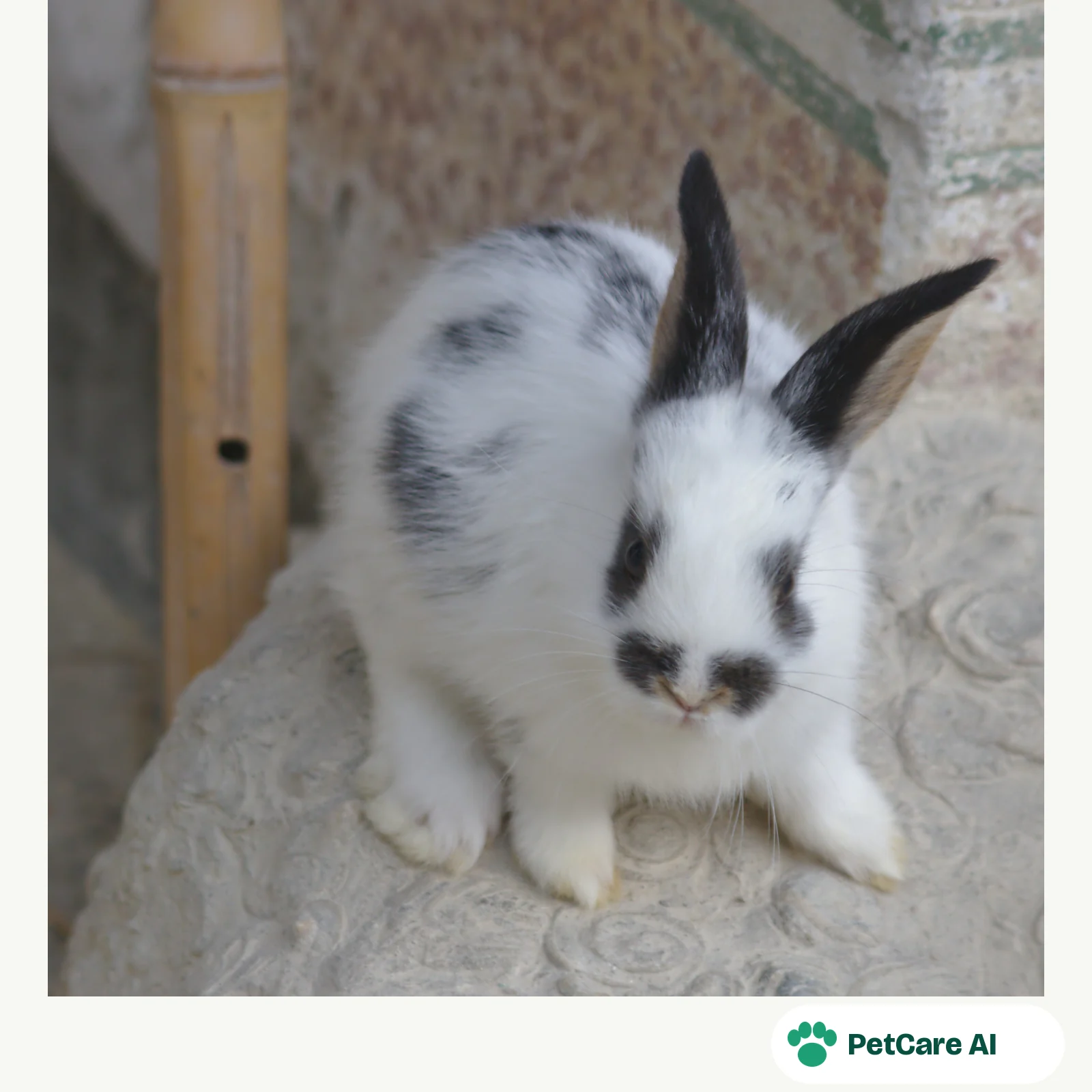
Photo: Paul Korecky, 2017-08-11 AT Wien 13 Hietzing, Tiergarten Schönbrunn, Oryctolagus cuniculus f. domesticus, via Wikimedia Commons. Photograph licensed under CC BY-SA 2.0.
Footnotes
-
Agriculture Victoria. Enrichment for rabbits. Space, choice, rotation and access for multiple rabbits. ↩ ↩2 ↩3
-
Rabbit Welfare Association & Fund. Gut Slowdown. Appetite and dropping changes requiring veterinary attention. ↩ ↩2 ↩3
-
RSPCA Victoria. Caring for your Rabbit. Feeding foundations, fresh water and hay-based activities. ↩ ↩2
-
PDSA. How should I exercise my rabbits?. Foraging, scatter feeding and rabbit-led interaction. ↩ ↩2
-
Rabbit Welfare Association & Fund. Digging. Digging boxes, suitable space and substrate cautions. ↩ ↩2 ↩3
-
RSPCA. Enrichment for rabbits: toys and activities. Hideouts, safe materials, supervision and escape prevention. ↩ ↩2 ↩3 ↩4
-
PetCare AI. Health diary and care tools. Owner-entered observations, saved history and limits of AI guidance. ↩ ↩2 ↩3