Start with the spot your cat already uses
If the new scratching post has gone untouched and the sofa is still getting shredded, your cat’s favourite spot can tell you what to try next.
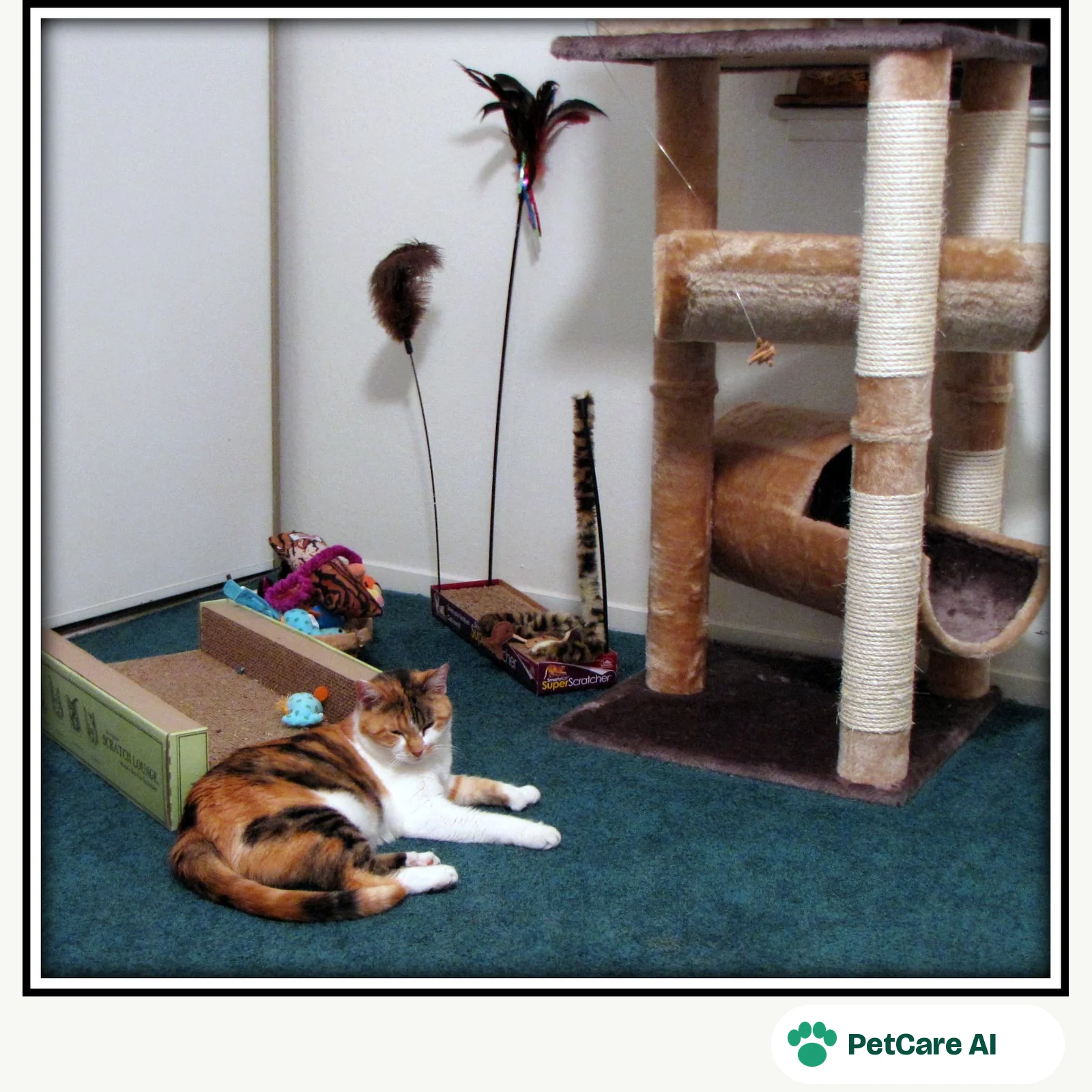 Offer a surface that fits the way your cat likes to scratch.
Cats scratch to maintain their claws, stretch and leave visual and scent marks. A table leg or sofa arm may give a cat a tall, steady surface in a room they already use. Set up an alternative that offers the same advantages, then give your cat time to make it part of their routine.12
Before moving anything, look at the wear marks and watch what your cat does when they approach. A long scrape up the side of the sofa points to a different starting setup from a rug scratched with all four feet near floor level. Make a note of where it happens, which way your cat reaches and whether they tend to scratch after a nap or while passing through the room.12
Match the scratcher to how your cat reaches
Use the pattern you see to choose the first thing to try. Individual cats can prefer different materials and angles, so treat the table as a starting point.12
| What you notice | Setup to try |
|---|---|
| Sofa arm | Tall post beside it |
| Rug | Flat pad beside it |
| After naps | Scratcher by the bed |
For an upright post, check that your cat can reach up to their full stretch and that the base stays steady when pressed. For a flat scratcher, choose a surface your cat can grip. If you already have a suitable post, test its position before you buy several replacements.12
Put the alternative within easy reach
Place the scratcher next to, or directly in front of, the damaged area. If your cat scratches the living-room sofa, start there, even if you eventually want the post on the other side of the room. Cats Protection and VCA both recommend starting where your cat has chosen to scratch.12 A survey of single-cat households found that the location of the post was associated with how much unwanted scratching owners reported. The survey captured a snapshot of each household. You can track what changes in yours when you move the post.3
Leave enough room for your cat to approach and stretch. If several cats share the home, offer scratchers in separate spots so each cat has access without competing for a single post. Keep a scratcher near a favourite sleeping area if your cat regularly uses it there.12
Reward your cat for using the new spot
If you see your cat use the scratcher, offer a small reward they already enjoy, such as a piece of their usual food. Give it when you see the scratching so it follows the behaviour you want to encourage. Keep the setup available when you are out of the room. Avoid swatting, shouting or using a spray bottle to interrupt scratching.123
You can temporarily cover the damaged area while the new scratcher stays in reach. If your cat starts using the scratcher reliably and you need to shift it, move it gradually. If they return to the furniture, try moving the scratcher closer again and check whether another shape or texture suits them better.12
When scratching patterns change
If your cat starts scratching in several new places, especially near doors or windows, note what else has changed. A new cat in the household, changes to the household routine or encounters with unfamiliar cats are worth mentioning when you seek help. A scratch mark on its own tells you where your cat scratched. The timing and surrounding changes provide more context.12
Contact your vet if the new scratching comes with a change in appetite, withdrawal or other signs your cat may be unwell. If scratching persists and you suspect stress or conflict, ask your vet about help from a qualified cat behaviour professional.12 PetCare AI’s Behaviour Coach offers training and setup guidance. A vet can examine your cat and investigate changes that could have a health cause.4
Keep track of what your cat actually tries
Change one thing at a time if you can. For example, move the existing post beside the couch and write a quick note when you see your cat use it. “Used the post after waking up, then scratched the couch later” tells you more about what to keep testing than “the post failed.” If your cat keeps choosing the rug, use that observation to try a flat surface nearby.12
Want help choosing what to try next? Open PetCare AI and tell the Behaviour Coach which surface your cat chooses, when they scratch and what you have already tried. Use its reward-based coaching to choose one small change to practise.4
Sources
Photo by Trish Hamme, Mama, I’m bored – There’s nothing to do!, via Wikimedia Commons, licensed under CC BY 2.0.
Footnotes
-
Cats Protection. Cats and scratching. Normal scratching, post stability and placement, surface angle and multi-cat access. ↩ ↩2 ↩3 ↩4 ↩5 ↩6 ↩7 ↩8 ↩9 ↩10 ↩11
-
VCA Animal Hospitals. Cat behavior problems — scratching behavior. Surface choices, placement, rewards and signs of a wider behaviour change. ↩ ↩2 ↩3 ↩4 ↩5 ↩6 ↩7 ↩8 ↩9 ↩10 ↩11
-
Demirbas et al. (2024). Evaluating undesired scratching in domestic cats. Survey evidence on scratching and its environmental context. ↩ ↩2
-
PetCare AI. Behaviour Coach. Reward-based coaching and training guidance. ↩ ↩2