Cat Carrier Training: Small Steps Before the Next Vet Visit
Start with a carrier your cat can investigate at home, then build towards travel one comfortable step at a time.
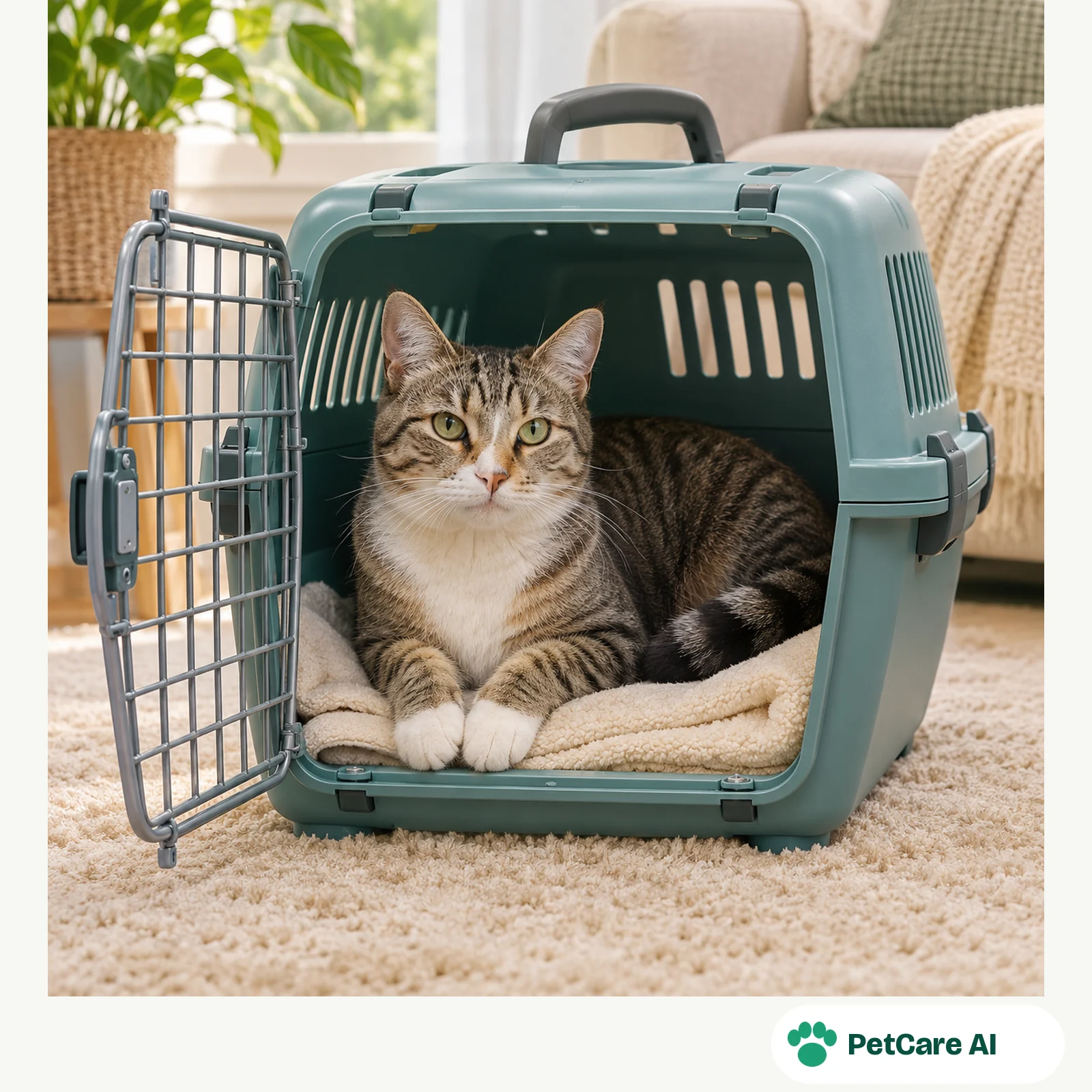 Let your cat explore an open carrier before practising closure.
If your cat disappears when the carrier comes out, begin well before the next planned journey. Gradual, reward-based practice can help the carrier become familiar rather than something that only appears before an outing.1
The aim is voluntary participation. Approach, entry, a closed door and movement are separate things to practise. There is no deadline for completing them: move forward when your cat is comfortable, and make the exercise easier when they struggle.2
If your cat needs veterinary attention now, call the clinic for help with safe transport. Do not postpone care until carrier training is finished.
Choose a carrier you can use comfortably
Look for a sturdy carrier with enough space for your cat to stand, sit and lie comfortably. A front opening allows voluntary entry; a removable top can let veterinary staff examine a worried cat in the carrier base. Ventilation and a stable floor matter too.3
Check the handles, fasteners and suitability for your cat's current size and weight. A carrier bought for a kitten may no longer suit the adult cat. Keep an open door secured so it cannot unexpectedly swing shut during practice.4
You do not need to reproduce the carrier in the photograph. Choose the practical features that suit your cat and ask your veterinary team if you are unsure.
Make the carrier part of the room
Put it in a quiet, accessible place at home, with familiar soft bedding. Leave the entrance open so your cat can come and go. If the top detaches, starting with the base alone can make exploration easier; add the top after your cat is comfortable with the base.4
Let investigation happen without reaching in after your cat. You can offer small rewards for approaching or exploring. For a play-motivated cat, gentle play near the carrier may help make the area inviting.3
Resist turning the first successful entry into an unexpected trip. Early practice should preserve the choice to leave.1 If you would like a separate introduction to markers and rewards, see our cat-training starter guide.
Build entry, door closure and movement separately
Use this progression as a checklist, rather than assigning a new stage to each day. RSPCA Australia recommends introducing confinement and movement gradually, after your pet is comfortable inside.1
- Approach: reward a comfortable investigation near the open carrier.
- Enter: allow voluntary entry and exit; keep the door open.
- Close: once resting inside is comfortable, close the door briefly, reward and reopen it.
- Lift: after closed-door practice is comfortable, lift the secured carrier slightly, put it down and reward.
- Move: build towards carrying it a few gentle steps, then progress to travel preparation.1
Support the carrier underneath as you carry it, keep it level and avoid swinging or jolting it. Put it down on a stable surface.3
For your own notes, distinguish what happened from what you hoped would happen. “Walked inside, then left while the door stayed open” is a useful observation. It does not need to become “ready for a car journey”.
Step back when your cat seems uncomfortable
If your cat becomes uncomfortable, return to an easier part of the exercise. Do not force entry during training or keep increasing the challenge to get the session finished.2
For example, if door closure is difficult, your next practice can return to entering and leaving with the door open. If even approaching is difficult, start with familiar bedding nearby and move it closer gradually. Reduce the demand, rather than starting a countdown.2
Expect preparation to take repeated practice; some cats need days or weeks. If a visit is approaching and your cat remains fearful, talk to the veterinary team in advance. Any medication or calming support should follow their advice and directions.5
Prepare for the journey as its own step
Being comfortable in a stationary carrier does not complete travel preparation. Introduce travel-related sounds and short journeys gradually, after the earlier steps are comfortable.1
Keep your cat secured inside the carrier throughout the car ride, even if they vocalise. AAHA advises against allowing a cat loose in the vehicle because of escape and driver-distraction risks.5
Carrier restraint also needs care. The Feline Veterinary Medical Association recommends the vehicle floor behind a front seat for most carriers. It advises using a seat belt with a carrier only when that carrier is crash-test certified for that use. Check your carrier's instructions and suitable placement before travelling.6
You can ask the clinic whether a quiet practice visit would be appropriate. Arrange this first, rather than arriving with an expectation that the team can accommodate it.5
When the appointment cannot wait
Training is preparation for future care. If you need to travel before your cat is ready, explain the difficulty to the clinic and ask for a handling and transport plan. Tell them about previous panic, escape attempts or problems during car journeys.35
Avoid experimenting with medicines or attempting to push through a frightening practice session before departure. Follow veterinary instructions for any prescribed support.5
AI cannot diagnose illness, prescribe travel medication or replace your veterinarian. A training conversation should never become a reason to delay needed veterinary contact.
Keep the next practice manageable with PetCare AI
PetCare AI's Behaviour Coach supports editable training plans, scheduled tasks and task-completion tracking.7 You can build your own plan around the stage you are practising, rather than treating the calendar as a deadline for your cat.
For example, an owner-written task could say: “Offer an open-carrier practice opportunity. Let the cat leave.” Its description could record the setup and the point at which you intend to stop. Mark the practice you actually completed, then adjust the next task to match what happened.
Keep veterinary instructions alongside your planning decisions. Completing an app task is a record of practice, not proof that your cat is ready to progress.
Ready to organise the next small step? Explore PetCare AI and use Behaviour Coach to build a manageable carrier-practice plan you can edit as you go.7
Sources
Image: AI-created for PetCare AI.
Footnotes
-
RSPCA Australia Knowledgebase. How can I train my pet to feel comfortable in a transport carrier? Updated 12 September 2025. Accessed 9 November 2026. ↩ ↩2 ↩3 ↩4 ↩5
-
Cats Protection. Choosing and using a cat carrier. Accessed 9 November 2026. ↩ ↩2 ↩3
-
Battersea Dogs & Cats Home. Travelling with cats. Updated 17 July 2026. Accessed 9 November 2026. ↩ ↩2 ↩3 ↩4
-
Cat Protection Society of NSW. Cat carrier training. Accessed 9 November 2026. ↩ ↩2
-
American Animal Hospital Association. How to Reduce Cat Stress at the Vet. Updated 14 July 2026. Accessed 9 November 2026. ↩ ↩2 ↩3 ↩4 ↩5
-
Feline Veterinary Medical Association. 2025 Transportation of Cats in Motor Vehicles Position Statement. Accessed 9 November 2026. ↩
-
PetCare AI. Behaviour Coach: flexible training plans, calendar and progress. Accessed 9 November 2026. ↩ ↩2