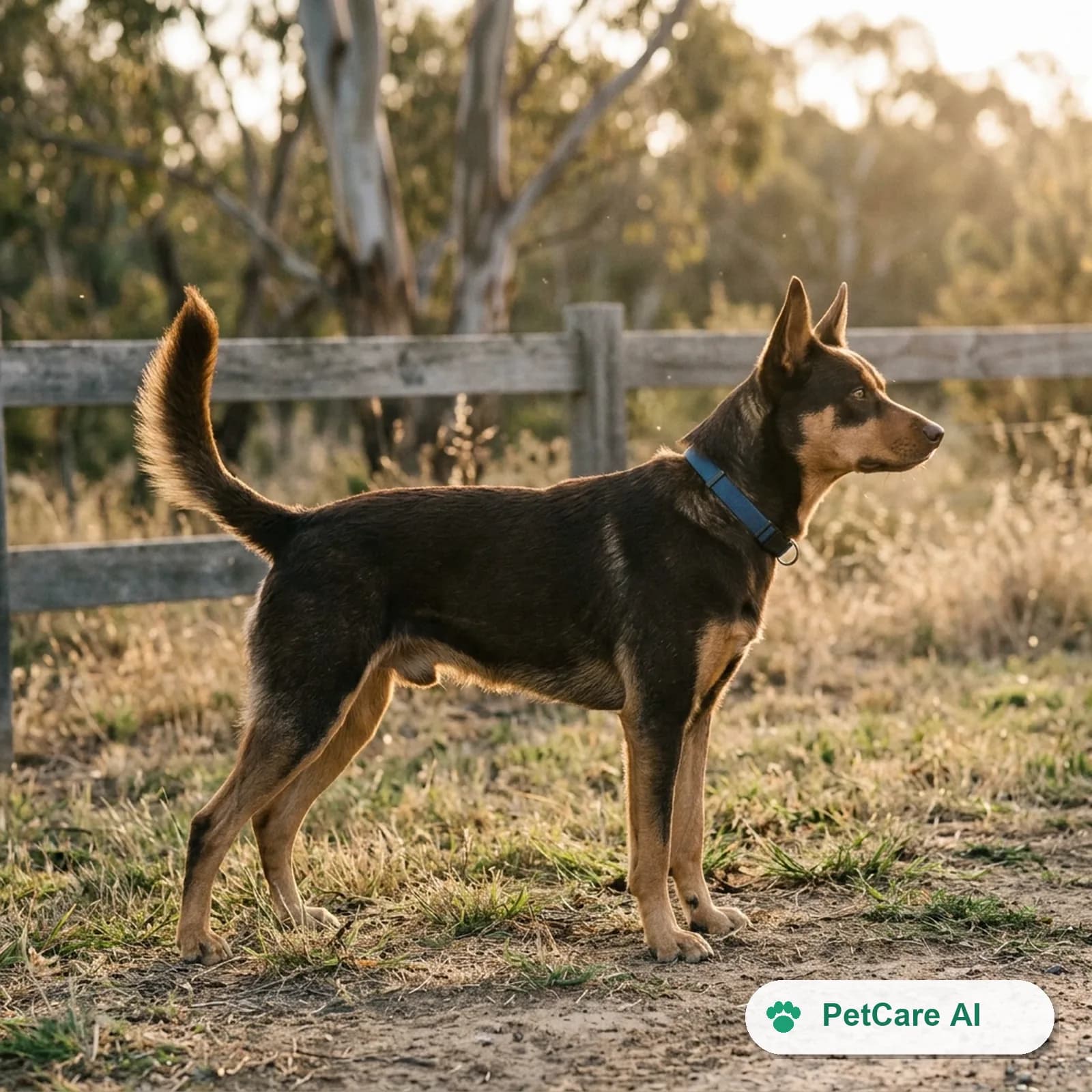
The grass flies, the lawn gets another bald patch, and your dog walks away looking extremely pleased. It looks like a clumsy clean-up attempt, but the real explanation is more interesting.

The post-toilet kick is called ground-scratching: a normal canine communication behaviour that leaves both scent and a visible mark.
The Quick Answer
Dogs usually kick the grass after pooping to mark and communicate, not to wipe their paws or cover the mess.
The behaviour is called ground-scratching. As the back paws scrape the surface, they leave scent from glands around the paws and create visible scuffs in the grass or soil. Together, those signals tell other dogs that someone has been there.12
The exact meaning is not as simple as "this is my territory." Depending on the dog and the setting, it may advertise presence, reinforce another scent mark, or form part of a social display. Researchers can observe where and when dogs do it, but they cannot translate every scent message.12
For most dogs, it is normal and harmless. The practical concerns are flying debris, damaged lawns, and sore paws or nails when the kicking happens on rough ground.
It Is Not a Clean-Up Move
The timing creates an easy myth. A dog toilets, then scrapes backward, so it looks as if they are trying to cover the evidence like a cat in a litter tray.
But dogs often scratch beside or behind the toilet spot rather than neatly covering it. They may also do it after urinating, or occasionally after sniffing an interesting patch of ground without toileting at all.3
The goal is not to hide the message. It is to make the message more noticeable.
Ground-scratching adds two communication channels:
- Scent: glands in and around the paw pads contribute odour as the feet scrape the surface.2
- Sight: disturbed soil, claw marks and flattened or torn grass create a visible sign that can last after the dog has left.1
Think of it less like wiping shoes and more like underlining a note.
What Is Your Dog Actually Saying?
"I was here" is the most honest short translation. Claims more specific than that quickly outrun the evidence.
In a study of a free-ranging dog group, researchers recorded urination, defecation and ground-scratching alongside the location, posture and identity of each dog. Ground-scratching appeared to play a role in both scent and visual communication. Marking also occurred around territorial boundaries and during social conflict, supporting several overlapping functions rather than one universal meaning.1
That does not mean every pet dog that kicks the lawn is issuing a threat or declaring ownership of the park. A companion dog's kick can be a routine part of its scent-marking sequence. Context matters:
- Where did it happen: home boundary, familiar route, dog park or a new place?
- Did the dog first sniff another mark?
- Was another dog nearby?
- Was the body loose and casual, or stiff and highly aroused?
- Did the dog scratch once and move on, or become frantic and hard to interrupt?
The same movement can carry different social weight in different situations.
Why Do Some Dogs Kick More Than Others?
Not every dog ground-scratches, and dogs that do will not necessarily perform it after every wee or poop.
Research in shelter dogs found ground-scratching after both urination and defecation in a minority of dogs. Adults were more likely than juveniles to perform several scent-marking behaviours, while the patterns were not limited to males.4 Female dogs ground-scratch too.
Individual confidence, age, learned routines, the number of nearby dog scents and the social setting may all affect how often you see it. A busy dog park or well-used walking route contains far more canine information than a quiet private garden, so it can bring out more marking behaviour.
It is best treated as individual communication, not a dominance diagnosis. One kick does not tell you your dog is "alpha," anxious or aggressive.
Should You Let Your Dog Do It?
Usually, yes. A brief ground-scratch on soft grass is normal behaviour and does not need punishment.23
Give your dog a moment if the surface and surroundings are safe. Then use your usual walking cue and move on. Punishing a normal scent-marking sequence can add conflict without teaching the dog what to do instead.
Redirect the kick when:
- The surface is hot concrete, sharp gravel or another abrasive material
- Grass, dirt or stones could hit a person or another animal
- Your dog is tearing up someone else's garden or a sports field
- The dog is close to a road, bike path or other hazard
- Repeated scraping is wearing down nails or irritating paw pads
A simple, positive alternative works well: as soon as your dog finishes toileting, call them toward you, reward the turn, and walk a few steps before they begin scratching. VCA also suggests cueing an incompatible behaviour such as sit, heel or a hand target and rewarding it.2
The redirection is for safety and manners, not because the behaviour itself is bad.
When to Check the Paws - or the Bigger Picture
Vigorous scraping on rough surfaces can crack a paw pad or damage a nail.23 After a particularly dramatic session, check for:
- Bleeding, a split nail or a nail sitting at an odd angle
- A cracked, grazed or lifted paw pad
- Limping or holding one foot up
- Repeated licking or chewing at a paw
- Flinching when a toe, nail or pad is gently examined
Contact your vet if there is ongoing bleeding, a torn nail, a deep pad injury, marked pain, swelling, or a limp that does not quickly settle.
Also pay attention to sudden change. A dog that has always given two casual kicks is different from one that abruptly starts scraping frantically at every stop while pacing, scanning, reacting to other dogs, or struggling to settle. The kicking alone is not proof of anxiety or illness, but the new pattern and the rest of the dog's behaviour are worth discussing with a vet or qualified behaviour professional.3
The Useful Takeaway
The post-poop kick is one of those behaviours that makes much more sense once you stop viewing it as a human cleaning habit.
Your dog is not embarrassed by the mess. They are adding information to it.
Remember the three-part rule:
- Normal: brief ground-scratching on a safe surface is ordinary canine communication.
- Be considerate: redirect it away from people, animals, hazards and vulnerable lawns.
- Check the dog: inspect pads and nails after forceful scraping, and notice any sudden behavioural change.
The grass may not appreciate the message, but the next dog probably will.
How PetCare AI Fits In
PetCare AI can help you think through a sudden change in behaviour, a sore-looking paw or a new limp by organising the details that matter: when it started, the surface your dog was on, whether there is bleeding, and what else changed.
It cannot translate scent marks, replace an in-person veterinary examination, or diagnose a damaged nail from behaviour alone. If your dog is in obvious pain, cannot bear weight, or has ongoing bleeding, contact a vet directly.
Did the kick suddenly become frantic, or is a paw looking sore? Start a free check with PetCare AI, then use the result to decide what to watch and what to tell your vet.
Sources
Footnotes
-
Cafazzo S, Natoli E, Valsecchi P. "Scent-Marking Behaviour in a Pack of Free-Ranging Domestic Dogs." Ethology. 2012;118(10):955-966. https://onlinelibrary.wiley.com/doi/full/10.1111/j.1439-0310.2012.02088.x ↩ ↩2 ↩3 ↩4
-
VCA Animal Hospitals. "Why do dogs kick grass after relieving themselves?" https://vcahospitals.com/shop/home/articles/why-dogs-kick-grass-after-nature-calls ↩ ↩2 ↩3 ↩4 ↩5 ↩6
-
Sung W. "Why Do Dogs Kick After Pooping?" PetMD. Reviewed by a board-certified veterinary behaviourist. https://www.petmd.com/dog/behavior/dog-behavior-why-do-dogs-kick-their-feet-after-pooping ↩ ↩2 ↩3 ↩4
-
McGuire B. "Scent marking in shelter dogs: Effects of sex and age." Applied Animal Behaviour Science. 2016;182:15-25. https://doi.org/10.1016/j.applanim.2016.06.001 ↩