If your cat pulls food out of the bowl before eating, eats from the edge, or suddenly seems fussy at meals, the bowl might be part of the picture. It is not the only possibility, and it should never be used to explain away illness, but it is an easy thing to test.
 A wide, shallow dish is a simple comfort test for cats who seem bothered by deep bowls.
The Quick Answer
Some cats appear to prefer eating from a wide, shallow dish or flat plate rather than a deep, narrow bowl. The common explanation is "whisker stress" or "whisker fatigue": repeated brushing of the whiskers against the sides of a bowl may feel annoying or overstimulating for some cats.
That idea is plausible because cat whiskers are highly sensitive tactile hairs. The follicles at the base of each whisker are connected to nerves and blood vessels, helping cats gather information about nearby objects, air movement, spaces, and surfaces.1
But the honest answer is also more cautious: whisker fatigue is still debated. One small study in the Journal of Feline Medicine and Surgery found that cats did not eat more, spend more time eating, or drop less food from a whisker-friendly dish compared with their normal dish. However, many cats in that study appeared to prefer the whisker-friendly dish when offered a choice.2
So the practical takeaway is simple:
| Situation | Best first move |
|---|---|
| Cat is eating normally but makes a mess or pulls food out | Try a wide, shallow dish or flat plate |
| Cat seems hungry but avoids the bowl | Try a bowl change, but watch closely |
| Cat is eating less, losing weight, drooling, vomiting, hiding, or acting as if in pain | Book a vet check rather than blaming the bowl |
What Whiskers Actually Do
Cat whiskers are not ordinary hairs. They are called vibrissae, and they help cats sense the world close to their face. Cats use them to judge spaces, detect nearby objects, sense subtle movement, and gather close-range information that their eyes may not capture well.1
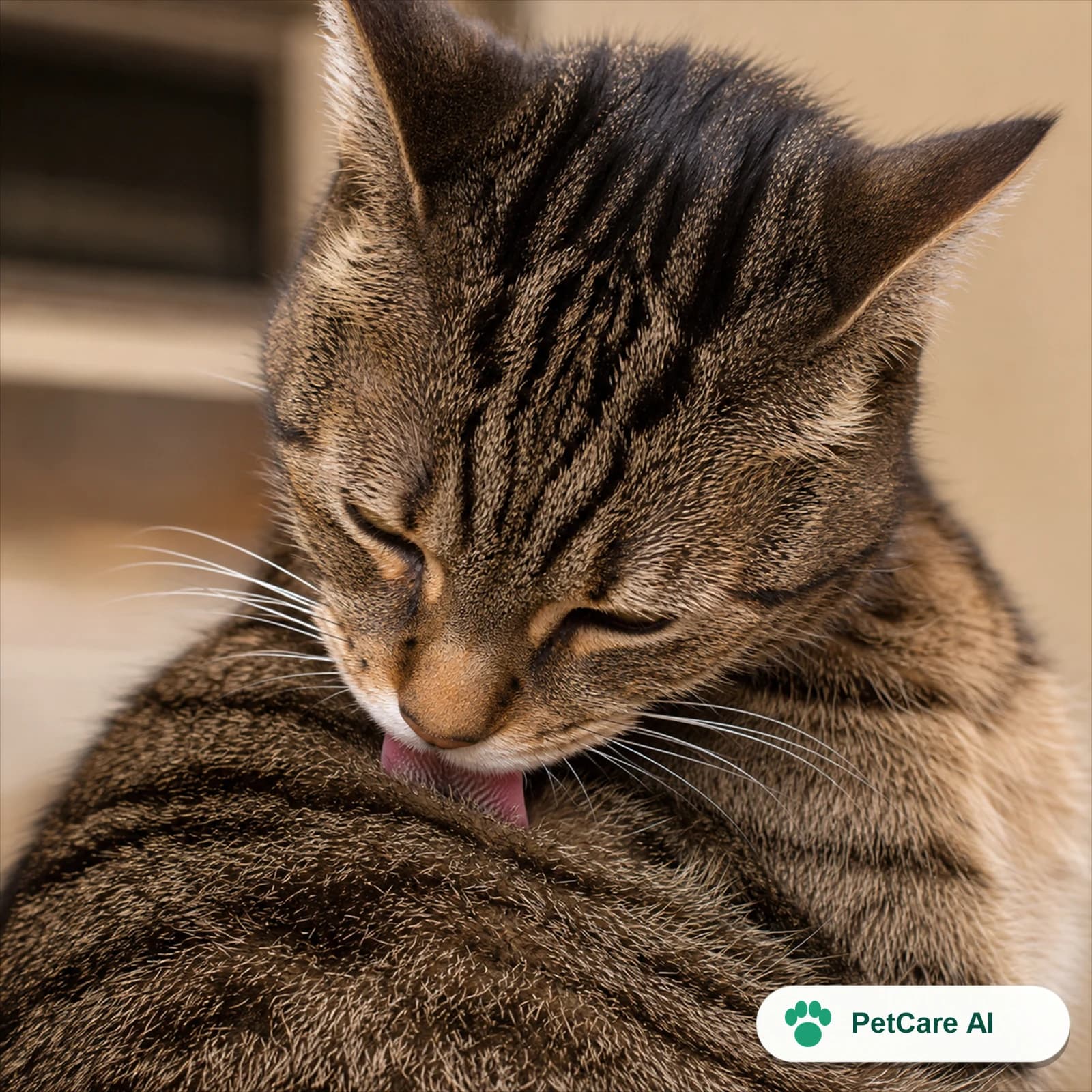
 Whiskers are part of a cat's sensory system, so feeding comfort can be worth testing - as long as health changes are not ignored.
The whisker itself is made of keratin, like hair. The sensitive part is the follicle at the base. When a whisker bends or vibrates, nerves around the follicle send information to the brain.3
That is why cats should not have their whiskers trimmed for cosmetic reasons. Cutting the hair shaft may not hurt in the same way plucking would, but it removes sensory information that helps the cat move confidently.3
Whiskers also show mood. A relaxed cat often holds whiskers loosely out to the side. A curious or hunting cat may bring them forward. A worried cat may pull them back closer to the face. They are part of the cat's whole body language system, not just decoration.
Why a Bowl Could Be Annoying
Imagine eating from a cup where the rim touches your cheeks with every bite. It may not be painful. It may not stop you eating. But if you had a choice, you might prefer a plate.
That is the idea behind whisker-friendly feeding. A deep or narrow bowl can make a cat's whiskers brush the sides repeatedly while the cat reaches for food. For some cats, that contact may be irritating enough that they change how they eat.
Possible signs people associate with bowl discomfort include:
- Pulling food out of the bowl and eating from the floor
- Eating only from the edge of the bowl
- Leaving food in the middle even when hungry
- Pawing food out before eating
- Hesitating at the bowl, then eating from a plate or floor
- Making more mess with deep bowls than with shallow dishes
None of these signs proves whisker stress. They can also happen because of dental pain, nausea, stress between pets, food dislike, arthritis, vision changes, or a bowl placed in an uncomfortable location.
That is why the bowl test should be treated as a low-risk experiment, not a diagnosis.
Try This First: The One-Week Bowl Test
If your cat is otherwise bright, eating enough, drinking normally, and maintaining weight, try a simple one-week test.
Use:
- A wide, shallow dish
- A small flat plate
- A low-sided saucer
- A stainless steel or ceramic dish that is easy to clean
Keep everything else the same for the first few days: same food, same feeding time, same location. If you change the bowl, food, and room all at once, you will not know which part helped.
Watch for:
- Less food being pulled onto the floor
- More relaxed posture at the dish
- Less hesitation before eating
- More complete meals
- Less pawing or edge-only eating
If your cat clearly prefers the plate, there is no problem with keeping it. A wide, shallow dish is a reasonable comfort adjustment, even if the science around whisker fatigue is not settled.
Bowl Shape Is Not the Only Feeding Detail
Cats can be fussy for good reasons. Feeding setup matters because cats are small predators who also think like prey animals. They often prefer quiet, predictable, low-stress places to eat.
Check these basics too:
Location. Put food somewhere quiet, away from loud appliances, busy doorways, and other pets who may crowd the bowl.
Water placement. Many cats prefer water away from food. A second water station can help, especially in warm weather.
Cleanliness. Old food smell, plastic scratches, and residue can put cats off. Wash dishes daily.
Material. Stainless steel and ceramic are usually easier to keep clean than scratched plastic.
Height and posture. Older cats with arthritis may prefer a slightly raised dish, but avoid making them stretch or stand awkwardly.
Multi-cat homes. If one cat is guarding the food area, the bowl shape is not the real issue. Separate feeding stations can reduce pressure.
A bowl change works best when the whole feeding setup feels safe.
When It Is Probably Not the Bowl
Do not blame whiskers if your cat's appetite has genuinely changed. Cats are good at hiding illness, and eating changes can be one of the earliest signs that something is wrong.
Book a vet check if you notice:
- Eating less than usual
- Skipping meals
- Weight loss
- Drooling or bad breath
- Pawing at the mouth
- Chewing on one side
- Vomiting or diarrhoea
- Drinking more than usual
- Hiding, lethargy, or behaviour change
- Trouble jumping to the feeding spot
- Sudden aggression around food
PetMD's veterinary-reviewed guidance on whisker fatigue raises this same caution: eating changes can look like bowl fussiness but may actually be dental disease, kidney disease, gastrointestinal illness, nausea, oral pain, or another health problem.4
That matters because a cat who is "just being picky" may actually be hungry but uncomfortable, nauseous, or sore.
Special Note: Cats Should Not Go Without Food
If your cat is not eating, do not wait several days to see if a new bowl fixes it. Cats, especially overweight cats, can become seriously unwell if they stop eating.
As a practical rule, contact your vet promptly if:
- Your cat eats nothing for 24 hours
- Your cat eats much less than normal for more than a day
- Your kitten, senior cat, diabetic cat, kidney cat, or medically fragile cat misses a meal
- Appetite loss comes with vomiting, weakness, collapse, breathing changes, pain, or hiding
A shallow plate is fine to try for comfort. It is not a treatment for appetite loss.
What About Water Bowls?
Some cats also seem bothered by narrow water bowls. Others simply prefer moving water, cooler water, wider bowls, or water placed away from food.
Try:
- A wide water bowl filled close to the top
- A second bowl in another room
- Ceramic or stainless steel instead of plastic
- A pet water fountain if your cat likes moving water
- Daily washing and fresh water
If your cat is drinking much more than usual, that is not a whisker issue. Increased thirst can be linked with kidney disease, diabetes, hyperthyroidism, diet changes, heat, and other conditions. It deserves a vet conversation, especially in older cats.
Should You Buy a Special Whisker Bowl?
You do not need anything fancy. The best test is usually the cheapest one: put the same food on a clean saucer or small plate and watch what happens.
A good cat feeding dish is:
- Wide enough that whiskers do not constantly hit the sides
- Shallow enough that the cat can reach food easily
- Heavy enough not to slide around
- Easy to wash
- Not made from scratched plastic
- Comfortable for your individual cat
If a marketed "whisker-friendly" bowl fits those criteria and you like it, fine. But the useful feature is the shape, not the label.
A Simple Decision Guide
Use this if you are trying to decide what to do tonight.
| What you see | What it may mean | What to do |
|---|---|---|
| Cat eats well from a plate but not a deep bowl | Bowl shape may be annoying | Keep the shallow dish |
| Cat pulls food onto the floor but otherwise eats normally | Habit, bowl discomfort, or feeding setup | Try a plate and clean feeding area |
| Cat seems hungry but backs away from food | Stress, nausea, mouth pain, bowl issue | Try a plate once, but book a vet check if it continues |
| Cat is losing weight or eating less | Medical issue possible | Vet check |
| Cat drools, paws mouth, chews oddly, or has bad breath | Dental/oral pain possible | Vet check |
| Cat vomits, hides, becomes weak, or stops eating | Illness possible | Same-day veterinary advice |
The PetCare AI Way to Think About It
This is exactly the kind of small pet-care question where a calm checklist helps. The answer is not "ignore it" and it is not "panic". It is:
- Notice the pattern.
- Try the low-risk comfort fix.
- Watch appetite, weight, and behaviour.
- Escalate if the pattern looks medical.
For a bright cat who is still eating, a shallow plate is a smart experiment. For a cat who is eating less, losing weight, drooling, vomiting, hiding, or acting as if in pain, the bowl is not the main question anymore.
The useful question becomes: "Is my cat safe to monitor, or do we need a vet check?"
Not sure whether your cat's eating change is a bowl habit or a health sign? Run a free 60-second check with PetCare AI — describe what changed, how long it has been happening, and what else you are seeing, and get a clearer next step.
Sources
Footnotes
-
PetMD, 10 Fascinating Facts About Cat Whiskers. https://www.petmd.com/cat/general-health/facts-about-cat-whiskers ↩ ↩2
-
Slovak JE, Foster TE. Evaluation of whisker stress in cats. Journal of Feline Medicine and Surgery. 2021;23(4):389-392. https://journals.sagepub.com/doi/pdf/10.1177/1098612X20930190 ↩
-
Hepper, Do Cats Feel Pain In Their Whiskers? Our Vet Explains. https://articles.hepper.com/do-cats-feel-pain-in-their-whiskers-vet-answer/ ↩ ↩2
-
PetMD, Whisker Fatigue in Cats: What It Is and How To Help. https://www.petmd.com/general-health/whisker-fatigue-cats-what-it-and-how-help ↩