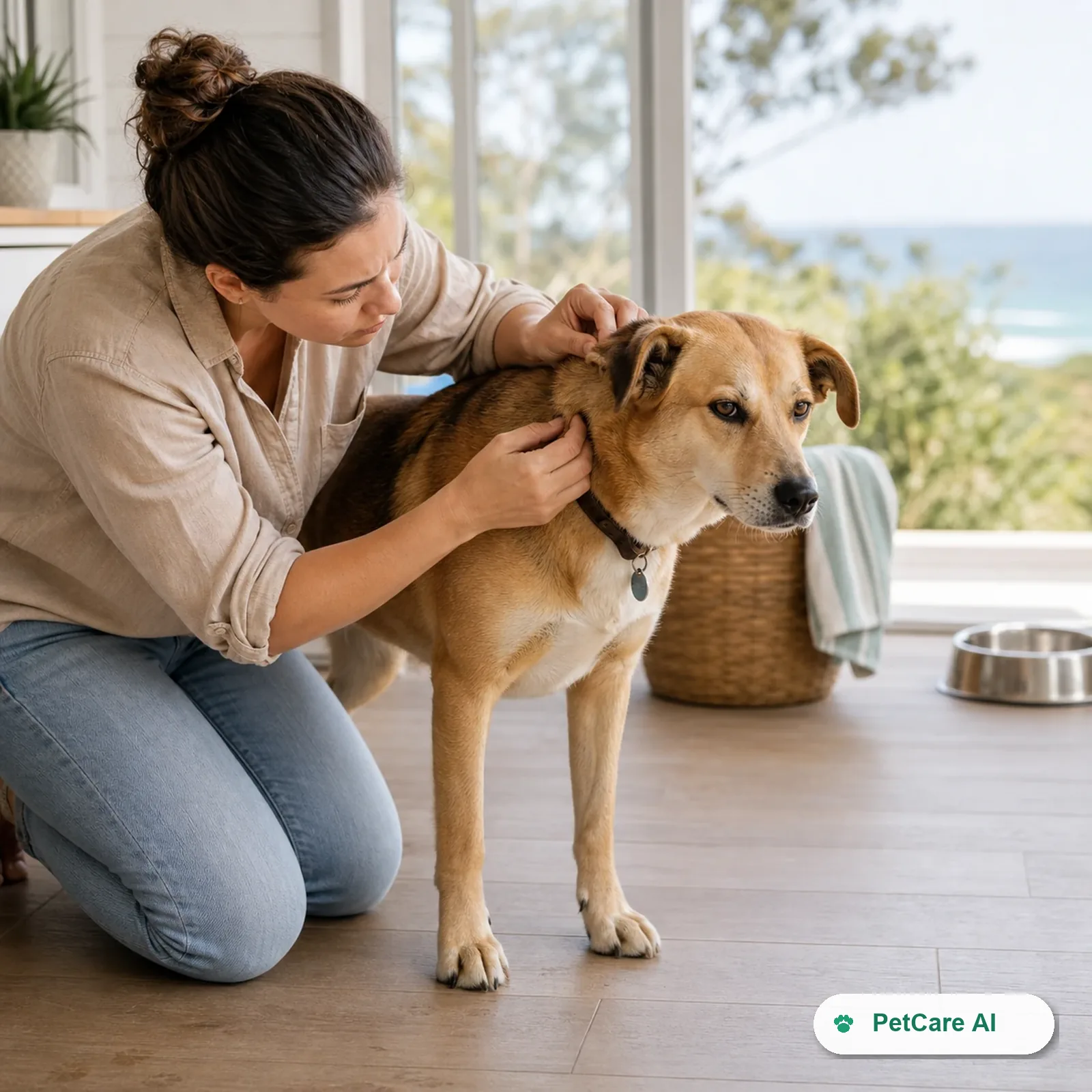
If your dog keeps scratching, chewing their paws or rubbing their face, not finding fleas is a useful observation — but it does not rule them out or tell you what treatment will help.1
 Look for patterns and changes to show your vet; a home skin check cannot confirm the cause of itching.1
The quick answer: fleas, other parasites, environmental allergies, food allergies and skin infections can all cause itching. More than one problem can be present. If scratching is persistent, is damaging the skin or is interrupting rest, contact your vet rather than cycling through home remedies.12
Sudden facial swelling or hives? Call a vet promptly. Trouble breathing or collapse means emergency veterinary care now.3
1. Can My Dog Have Fleas If I Cannot See Any?
Yes. Dogs with flea allergy can react to a small number of bites, and grooming can remove evidence before you look. An apparently flea-free coat does not exclude flea allergy.4
Tell your vet the product name, last treatment date and whether other pets are treated. Bring the packaging or a photo. Ask whether the product and schedule cover your dog's needs; do not add another treatment or repeat a dose early without advice.
Fleas are only part of the investigation. Finding them does not exclude a second skin problem.4
2. What Else Causes Itching Without Visible Fleas?
These clues help describe the problem; they cannot diagnose it.12
| What you notice | Possibilities your vet may investigate |
|---|---|
| Paw chewing, face rubbing, recurring itchy ears | Environmental allergy, food allergy, secondary infection |
| Itching that returns in a particular season | Environmental triggers such as pollens |
| Red, sore, smelly or greasy skin | Yeast or bacterial infection, sometimes alongside allergy |
| Itching with patchy hair loss | Parasites, infection or damage from scratching |
An allergy and an infection can occur together. Treating one may not resolve the other, which is why a shampoo or food change can appear to help briefly without solving the problem.1
3. What Can I Safely Do While Waiting for Advice?
Speak to your vet before starting skin treatments. The right treatment depends on the cause.5
For the appointment, prepare a short record:
- Where: paws, ears, belly, back, face or several areas.
- When: the first day you noticed it and whether it comes and goes.
- Impact: waking to scratch, stopping play or chewing the skin.
- Changes: food, treats, grooming products, bedding detergent or walking routes.
- Evidence: clear photos and a short video of the scratching.
If your dog has a known pollen trigger, ask your vet about rinsing off after walks and adjusting exposure. Ask which shampoo is suitable rather than using a human product. Do not give human antihistamines without veterinary advice.6
4. When Does an Itchy Dog Need a Vet?
Repeated itching deserves an appointment even when your dog otherwise seems well. Redness, hair loss, wounds and thickened skin are reasons to seek help, rather than waiting for the itch to become severe.5
| Situation | Next step |
|---|---|
| Persistent scratching, paw chewing or recurring itchy ears | Book a vet appointment |
| Raw or painful skin, or scratching your dog cannot settle from | Call your vet today for advice |
| Sudden facial swelling or hives | Contact a vet promptly |
| Breathing difficulty or collapse | Go to an emergency vet immediately |
Sudden allergic reactions follow a different pathway from a longstanding itch. Do not wait for an app assessment if breathing or consciousness is affected.3
5. Should I Change My Dog's Food or Buy an Allergy Test?
Food allergy is possible, but symptoms alone cannot distinguish it from environmental allergy. A vet may first check for parasites and infections, using an examination and skin samples.7
If food allergy needs investigating, the useful test is a supervised elimination diet followed by a food challenge. AAHA guidelines describe trials lasting 4–12 weeks, with many dogs needing around eight weeks. Your vet chooses the diet and timing.7
For example, an eight-week plan is 56 days following the agreed diet, including instructions about treats, chews and flavoured medicines. Swapping biscuits for a weekend cannot answer the same question. Ask your vet before changing prescribed medication or parasite prevention to accommodate a trial.7
6. Honest Limits: What Photos and AI Cannot Tell You
A photograph can document redness or hair loss. It cannot reliably distinguish allergy from mites or infection, and it cannot replace skin sampling or an examination. Veterinary guidelines recommend a structured investigation rather than diagnosing from appearance alone.7
PetCare AI can help you organise observations and questions for a vet visit. AI complements veterinary care; it does not diagnose the cause of itching or prescribe treatment. Review any generated summary for accurate dates, symptoms and medication details before sharing it.
7. How to Make the Next Flare Easier to Manage
Once your vet has identified the problem, ask for a written plan covering parasite prevention, skin care, treatment and rechecks. Allergic skin disease often needs ongoing management, and a plan may combine several treatments.8
Keep a simple diary of symptoms and treatment response. At the next review, ask: “What should improve, by when, and what should make me call sooner?”
Worried about your dog's scratching? Visit PetCare AI to organise what you have noticed and prepare questions for your vet — including where the itching started, recent changes and what you have already tried.
Sources
Footnotes
-
Merck Veterinary Manual, Itching (Pruritus) in Dogs. https://www.merckvetmanual.com/dog-owners/skin-disorders-of-dogs/itching-pruritus-in-dogs ↩ ↩2 ↩3 ↩4 ↩5
-
PDSA, Skin allergies in dogs. https://www.pdsa.org.uk/pet-help-and-advice/pet-health-hub/conditions/skin-allergies-atopic-dermatitis-in-dogs ↩ ↩2
-
VCA Animal Hospitals, Emergencies in Dogs. https://vcahospitals.com/premier/know-your-pet/common-emergencies-in-dogs ↩ ↩2
-
Merck Veterinary Manual, Fleas of Dogs. https://www.merckvetmanual.com/dog-owners/skin-disorders-of-dogs/fleas-of-dogs ↩ ↩2
-
PDSA, Itchy skin in dogs. https://www.pdsa.org.uk/pet-help-and-advice/pet-health-hub/symptoms/itchy-skin-in-dogs ↩ ↩2
-
PDSA, Allergies in pets. https://www.pdsa.org.uk/pet-help-and-advice/looking-after-your-pet/all-pets/itchy-and-allergic-pets ↩
-
American Animal Hospital Association, 2023 AAHA Management of Allergic Skin Diseases in Dogs and Cats Guidelines. https://www.aaha.org/wp-content/uploads/globalassets/02-guidelines/2023-aaha-management-of-allergic-skin-diseases-in-dogs-and-cats-guidelines/resources/2023-aaha-management-of-allergic-skin-diseases-guidelines.pdf ↩ ↩2 ↩3 ↩4
-
Merck Veterinary Manual, Allergies in Dogs. https://www.merckvetmanual.com/dog-owners/skin-disorders-of-dogs/allergies-in-dogs?mredirectid=188 ↩